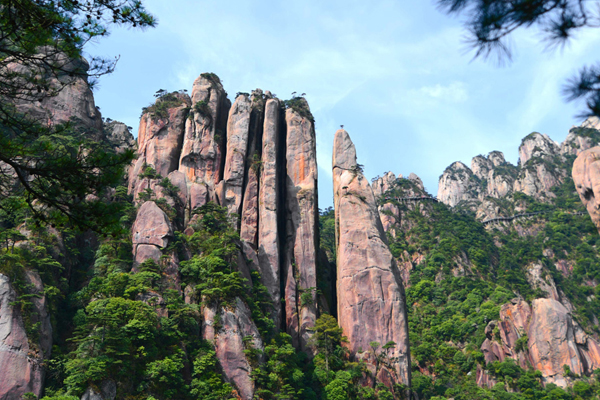
Sanqing Mountain National Park
Introduction
Sanqing Mountain National Park, located in the northeast of Jiangxi province, China, is renowned for its awe-inspiring natural beauty and exceptional biodiversity. This granite mountain massif rises steeply to an elevation of approximately 1,817 meters above sea level and is situated in the west of the Huaiyu mountain range. It is marked by a concentration of fantastically shaped granite pillars and peaks, with 48 peaks and 89 pillars that often resemble human or animal silhouettes. The park was inscribed on the UNESCO World Natural Heritage List in 2008, recognized for its outstanding scenic quality and rich biodiversity.
Named "Sanqing," meaning "Three Pure Ones," the mountain holds spiritual significance as a sacred Taoist site. The dynamic landscape of Sanqing Mountain is constantly transformed by its unique meteorological conditions, which result in phenomena such as bright halos on clouds and white rainbows. The park's juxtaposition of granite features against lush vegetation creates a visually arresting scenery that captivates visitors and photographers alike.
Geographical Location and Features
Sanqing Mountain National Park is situated in Shangrao city, Yushan county, in the northeast of Jiangxi province. The park is part of the Huaiyu mountain range, a region characterized by its subtropical monsoonal and maritime influences. This geographical setting creates an island of temperate forest amidst the surrounding subtropical landscape.
The park's granite formations are its defining feature, with 48 peaks and 89 pillars that have been shaped by millions of years of geological activity. These formations, combined with the park's vegetation, waterfalls, lakes, and springs, contribute to its exceptional scenic beauty. Some of the waterfalls within the park reach heights of up to 60 meters, adding to the dramatic landscape. The park's suspended walking trails provide visitors with a unique perspective on its natural wonders, allowing them to explore and appreciate the park's serene atmosphere.
Biodiversity and Ecology
Sanqing Mountain National Park is a biodiversity hotspot, supporting a wide variety of plant and animal species. The park's temperate forest is home to numerous endemic species, adapted to the unique climatic conditions of the region. The subtropical monsoonal and maritime influences create a humid environment that supports a rich tapestry of plant life, including several rare and endangered species.
The park's diverse habitats provide a sanctuary for various wildlife species, including several birds, mammals, and reptiles. The granite peaks and pillars offer nesting sites for birds, while the forested areas provide shelter and food for other animals. The biodiversity of Sanqing Mountain is a key aspect of its designation as a UNESCO World Heritage Site, underscoring its importance as a natural reserve and a valuable resource for ecological research and conservation.
Cultural and Historical Significance
Sanqing Mountain, known as the "Three Pure Ones" in Chinese, is a site of deep cultural and historical significance. It holds a special place in Taoist culture as a sacred mountain, with its name referring to the supreme deities in Taoism, highlighting its spiritual significance and mystical allure.
The mountain has long attracted those seeking spiritual enlightenment and has been pivotal in the practice and preservation of Taoism in China. Its landscapes are not only breathtaking but also rich with spiritual meaning. The temples and Taoist architecture on Sanqing Mountain reflect its historical role as a hub of religious and cultural life in China.
Historically, the mountain's unique geological formations and tranquil landscapes have inspired countless artists and poets, cementing its status as a cultural icon. The seamless blend of natural beauty and cultural depth makes Sanqing Mountain a unique and invaluable part of China's cultural heritage.
Tourism and Visitor Experience
Sanqing Mountain National Park is a popular destination for tourists seeking to experience its natural beauty and cultural heritage. The park offers a range of activities for visitors, including hiking, photography, and cultural experiences. The suspended walking trails provide access to some of the park's most striking landscapes, allowing visitors to explore the granite formations, lush forests, and cascading waterfalls.
The park's infrastructure is designed to enhance the visitor experience while preserving the natural environment. Facilities such as visitor centers, guided tours, and educational programs provide information about the park's natural and cultural significance. Cultural activities, such as tai chi and calligraphy workshops, offer visitors an opportunity to engage with traditional Chinese practices and gain a deeper understanding of the mountain's cultural heritage.
Conservation Efforts
Conservation efforts at Sanqing Mountain National Park focus on preserving its unique natural environment and biodiversity. The park's boundaries are carefully delineated to protect its scenic qualities and ecological integrity. A buffer zone surrounds the park, providing an additional layer of protection for its natural resources.
Conservation initiatives include monitoring and managing the park's diverse ecosystems, protecting endangered species, and promoting sustainable tourism practices. The park's status as a UNESCO World Heritage Site highlights its global significance and underscores the importance of ongoing conservation efforts. Collaboration between government agencies, conservation organizations, and local communities is essential to ensure the long-term preservation of Sanqing Mountain's natural and cultural heritage.
In summary, Sanqing Mountain National Park is a site of exceptional natural beauty and cultural significance. Its unique geological features, diverse ecosystems, and rich cultural heritage make it a valuable destination for both nature enthusiasts and cultural travelers. Conservation efforts are crucial to maintaining the park's integrity and ensuring that future generations can continue to enjoy its wonders.








